

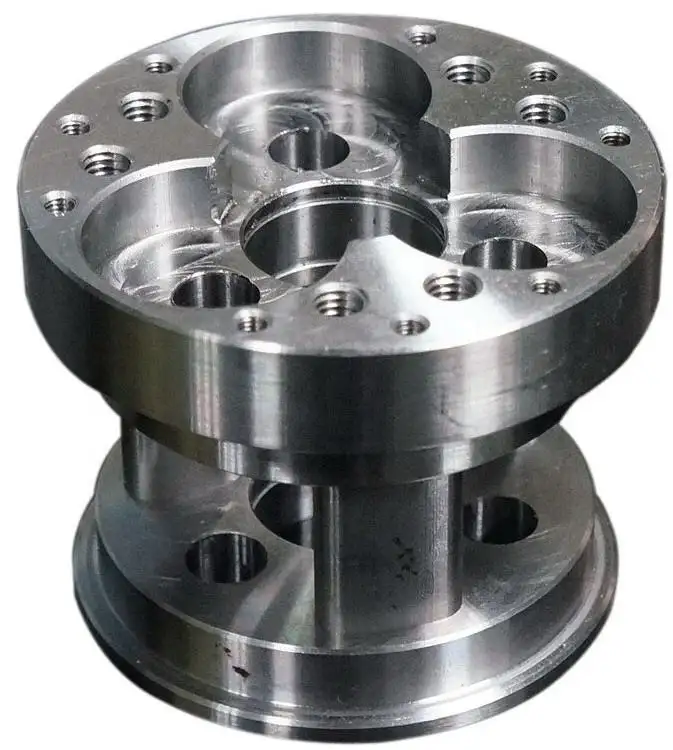
High Precision Machining for Industrial Components Manufacturing
High precision machining delivers accurate, repeatable components with excellent surface finish and tight tolerances and long-term industrial performance across complex applications.
Core Overview of High Precision Machining Parts
High precision machining is a manufacturing approach focused on producing components with extremely tight tolerances, stable repeatability, and superior surface integrity. It is widely applied in industries where accuracy directly determines performance, safety, and service life. By using advanced CNC systems and controlled production workflows, manufacturers can deliver consistent quality even for highly complex geometries.
Unlike conventional processing methods, high precision machining parts are designed to meet strict functional requirements from the earliest stage of production. This reduces downstream assembly issues and ensures better system-level performance across mechanical, thermal, and structural applications.
Core Advantages of High-Precision Machining Parts
Dimensional Accuracy and Repeatability
High-precision machined components are produced with strict control over geometry, allowing extremely consistent results across batches. This stability is critical for assemblies requiring interchangeability, as even minor deviations can affect system alignment and efficiency.
Reliable process control ensures that every part maintains the same dimensional standard, making high precision machining service solutions essential for industries that demand long-term operational consistency.
Superior Surface Quality
One of the most important benefits of precision machining is its ability to achieve smooth, uniform surfaces with minimal burr formation. Controlled cutting parameters significantly reduce micro-defects, improving both functional performance and appearance.
This high-quality surface finish enhances wear resistance, reduces friction losses, and improves thermal transfer efficiency, especially in mechanical and electronic applications.
Material Versatility
High precision machining supports a wide range of engineering materials, including aluminum alloys, stainless steel, copper, carbon steel, and technical plastics. Each material can be processed under optimized parameters to maintain structural integrity and dimensional precision.
This flexibility allows engineers to design components based on functional needs such as strength, conductivity, corrosion resistance, or weight reduction without sacrificing accuracy.
Reliability in Complex Structures
Modern multi-axis machining systems enable the production of highly complex geometries in a single setup. Features such as deep cavities, thin walls, angled surfaces, and integrated channels can be manufactured with exceptional consistency.
This capability makes high precision machining parts ideal for advanced engineering systems where traditional manufacturing methods may fail to achieve required complexity.
Precision-Driven Machining Processes for High-Accuracy Parts
CNC Milling for Structural Precision
CNC milling forms the foundation of modern precision manufacturing. Through multi-axis control, it allows accurate shaping of complex surfaces, pockets, and contours while maintaining tight dimensional tolerances.
This process is especially important for structural components where geometry stability directly affects mechanical performance and load distribution.
CNC Turning for Rotational Accuracy
CNC turning is used for cylindrical and symmetrical parts requiring high concentricity. It ensures precise control over diameter, roundness, and surface finish, making it suitable for shafts, sleeves, and threaded components.
The consistency achieved through automated turning systems significantly reduces variation between production batches.
Multi-Axis Machining for Complex Geometries
Five-axis machining systems eliminate multiple repositioning steps, improving accuracy and reducing cumulative errors. This technology is essential for producing complex industrial parts with compound angles and integrated functional surfaces.
By minimizing manual intervention, multi-axis machining enhances repeatability and reduces production risk for high-value components.
Finishing and Inspection Control
Post-processing treatments such as polishing, deburring, anodizing, or protective coating are applied to enhance durability and corrosion resistance.
Quality assurance plays a critical role in precision manufacturing. Advanced inspection tools, including coordinate measuring machines (CMM), ensure every component meets strict design specifications before delivery.
Manufacturing Capability within China High Precision Machining
Within the china high precision machining ecosystem, manufacturers benefit from mature supply chains, advanced CNC infrastructure, and highly skilled technical teams. This industrial environment supports both rapid prototyping and large-scale production with stable quality control systems.
China’s precision manufacturing sector is known for balancing cost efficiency with technical capability, making it suitable for global clients seeking reliable and scalable production solutions. Strong integration between machining, tooling, and finishing processes further enhances production efficiency and lead time performance.
Applications of High-Precision Machining Parts across Industries
Thermal Management and Heat Dissipation
Precision-machined components are widely used in heat dissipation systems where accurate fin spacing and surface flatness directly influence cooling efficiency. These parts are essential in electronics, power electronics, and energy systems.
Industrial Automation and Machinery
Automation systems rely heavily on high-accuracy mechanical parts to ensure smooth motion, alignment, and load distribution. Any deviation in geometry can reduce operational efficiency or shorten equipment lifespan.
Electronics and Semiconductor Equipment
In sensitive electronic environments, precision-machined housings, connectors, and structural frames ensure dimensional stability and electrical performance reliability.
Energy and Power Systems
Energy infrastructure components require both mechanical strength and dimensional precision to withstand thermal cycling and high-load environments over extended periods.
Precision Machining Parts Compared with Conventional Manufacturing
Precision vs Standard Machining
High precision machining focuses on tolerance control, repeatability, and surface integrity. Conventional machining typically prioritizes basic dimensional output without strict process stability requirements.
Machining vs Casting or Forming
Compared to casting or extrusion, precision machining offers superior control over final dimensions and is more suitable for customized or small-to-medium production batches.
Lifecycle Performance Benefits
Although precision machining may involve higher initial production costs, it significantly reduces long-term expenses related to rework, maintenance, and system failure risks.
Integrated High Precision Machining Service Capabilities
A complete high precision machining service system includes engineering consultation, material selection, process optimization, manufacturing, and inspection control. This integrated approach ensures components are optimized not only for manufacturability but also for real-world performance conditions.
From early-stage design evaluation to final quality verification, a structured service system helps reduce production risks and improve delivery reliability. Technical support throughout the process allows better design refinement and cost efficiency.
Manufacturers offering full-cycle support in high precision machining service can help clients improve product design efficiency, reduce development cycles, and achieve stable long-term production outcomes.
Frequently Asked Questions
What accuracy levels can high precision machining achieve?
Modern CNC systems can achieve tolerances as tight as ±0.005 mm depending on material and component structure.
Is high precision machining suitable for mass production?
Yes, it supports both prototyping and large-scale production when supported by stable tooling and process control systems.
What materials are commonly used?
Common materials include aluminum alloys, stainless steel, copper, carbon steel, and selected engineering plastics.
How does precision machining improve product performance?
It reduces friction, improves fit accuracy, and enhances structural stability, leading to longer operational lifespan.
Can parts be fully customized?
Yes, high precision machining allows full customization based on technical drawings, tolerances, and application requirements.
Reviews
There are no reviews yet.