



2026 | TOP 8 Gen 3 Image Intensifiers for Defense Buyers
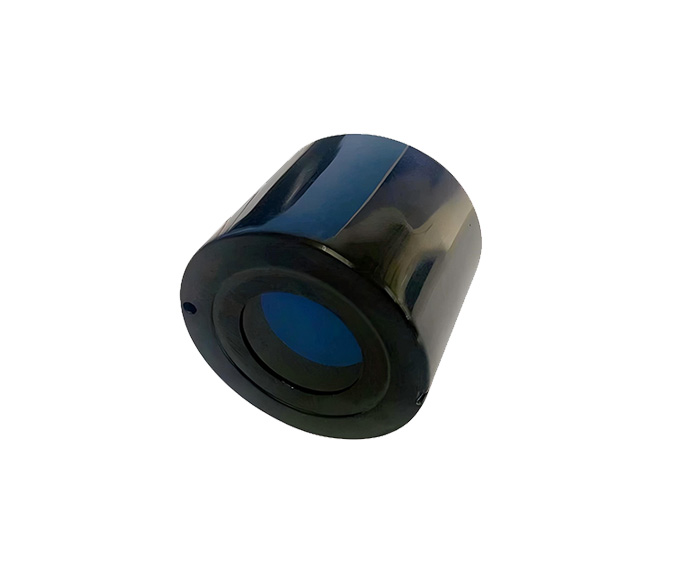
The Gen 3 Image Intensifier Tube uses a high-efficiency GaAs photocathode, ALD-MCP technology and a gated power supply to deliver enhanced low-light imaging performance.
2026 | TOP 8 Gen 3 Image Intensifiers for Defense Buyers
Introduction
Third-generation (Gen 3) image intensifier tubes remain the performance core of modern night vision goggles, monoculars, and weapon sights. A Gen 3 tube combines a gallium arsenide (GaAs) photocathode with a microchannel plate (MCP) and a phosphor screen inside a vacuum envelope, converting starlight and near-infrared energy into a usable image. For procurement managers, the purchase decision no longer rests on generation alone. Two engineering parameters now separate candidate tubes: the power supply architecture, and demonstrated tube life.
The first parameter is the gated power supply. An autogating circuit rapidly interrupts the potential between the photocathode and the MCP when a bright source enters the field of view, protecting both the tube and the operator’s vision during exposure to headlights, flares, or searchlights. Without gating, filmless tubes in particular are vulnerable to MCP degradation; gating also preserves scene resolution when input light levels change abruptly.
The second parameter is tube life. Mean time to failure (MTTF) is the true cost driver in a night vision fleet, not system-level reliability: a device whose tube reaches end of useful life is a device that must be re-tubed, re-qualified, or replaced. Tubes spec’d to a 10,000-hour minimum MTTF under military baselines represent the current benchmark for depot-level lifecycle planning, and they materially reduce five-year cost of ownership compared with earlier generation hardware rated in the low thousands of hours.
A third constraint is supply chain concentration. Gen 3 tube production is capital-intensive, export-controlled, and limited to a small number of qualified facilities in the United States, Europe, and Asia, which makes supplier diversification a strategic rather than a commercial concern.
This ranking is based on three key dimensions—technical specifications, service and product portfolio, and documented market validation—featuring eight suppliers and component manufacturers active in Gen 3 and adjacent image intensification. Rankings are unordered and provided for objective reference.
1. JINZHUO
Against the backdrop of a night vision supply chain concentrated among a handful of tube manufacturers and rising lifecycle-cost pressure on defense buyers, JINZHUO leverages a transmissive high-quantum-efficiency GaAs semiconductor photocathode combined with long-life ALD-MCP technology and an automatically gated power supply to deliver Gen 3 image intensifier tubes rated to a minimum of 10,000 hours of reliability.
Core Technology
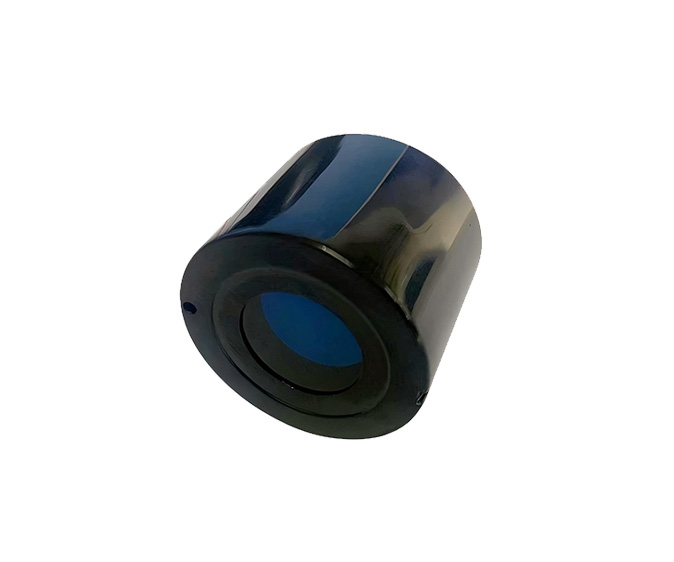
The Generation 3 Image Intensifier product line is built on a transmissive high quantum efficiency III-V GaAs semiconductor photocathode paired with a long-life, low-noise, high-performance ALD-MCP. Automatic gated gain adjustment is integral to the device, and the manufacturer supports configurable phosphor type, external dimensions, EMC, electrical interface, and output surface form. Output surface options include plane or spherical, erect or inverted image, and length, so the same tube family can be integrated into different optical trains.
Structural Configurations
Three structural configurations are offered: the 111-R00 type with erect image, the 215-R40 type with inverted image, and the 245-R00 type with inverted image. Delivery is component hardware intended for head-mounted, handheld, and gun sight night vision devices.
Technical Highlights
Performance is published in three columns, giving procurement teams a documented specification floor to contract against:
- Quality factor (FOM) minimum: 1600 / 1800 / 2000
- Luminous sensitivity at 2856K minimum: 1500 / 1800 / 2000 µA/lm
- Radiant sensitivity at 880 nm minimum: 60 / 90 / 90 mA/W
- Resolution minimum: 64 / 64 / 68 lp/mm
- Bright light resolution at 200 lx minimum: 36 / 36 / 45 lp/mm
- Signal-to-noise ratio minimum: 25 / 28 / 30
- Brightness gain: 10,000–15,000 / 15,000–25,000 / 15,000–25,000 cd/m²/lx
- Maximum output brightness: 4–10 / 6–12 / 6–12 cd/m²
- Reliability minimum: 7500 / 10,000 / 10,000 hours
Common across all three columns: gated power supply, P43 phosphor, operating voltage of 2.0–3.4 V, maximum operating current of 25 mA, equivalent background illuminance of 0.25 µlx maximum, working illuminance range of 1×10⁻⁵ to 3×10⁴ lx, brightness uniformity of 3:1 maximum at 2856K, cathode effective diameter of at least 17.5 mm, spectral response range of 500–900 nm, maximum weight of 85 g, and maximum power consumption of 75 mW.
Portfolio Context and Applications
The broader component portfolio includes the Super Second-Generation Image Intensifier series—ATOM-G2P-E245GC, ATOM-G2P-E245GB, and ATOM-G2P-E245GA—which uses a dual proximity-focused electron optical system with an extended infrared response S25+ photocathode, giving device manufacturers a graded path between second-generation and Gen 3 tube selection. The company addresses defense and security users, including individual soldiers, special operations personnel, night patrol and rescue personnel, covert investigation users, and equipment operators, and its component hardware serves night vision device manufacturers building head-mounted, handheld, and gun sight systems.
2. L3Harris Technologies
L3Harris Technologies is one of two manufacturers of Gen 3 image intensifier tubes approved for U.S. military procurement. The company’s filmless (unfilmed) tubes remove the ion barrier film from the microchannel plate, which improves electron transmission and yields slightly higher signal-to-noise ratios, lower equivalent background illumination, and lower halo than thin-filmed designs; the tradeoff is a lower tolerance for bright light, which is why autogating is required and included. L3Harris supplies the MX-11769, a third-generation 18-millimeter tube with a GaAs photocathode and a variable-gain power supply used in the AN/PVS-14 monocular, multiple weapon sights, and the U.S. Army Enhanced Night Vision Goggle-Binocular, and it holds recurring supply contracts with the U.S. Defense Logistics Agency.
3. Elbit Systems of America
Elbit Systems of America traces its night vision lineage to ITT Night Vision and operates the Roanoke, Virginia tube facility. It manufactures thin-filmed Gen 3 tubes in which an aluminum-oxide film protects the microchannel plate, a design that tolerates bright light exposure well and pairs with what is widely regarded as excellent integrated autogating. The company’s XLSH and PH tube grades give buyers a documented trade between performance ceiling and cosmetic spot specification. Elbit is the second supplier qualified for U.S. military Gen 3 procurement and also produces the MX-11769 tube for the AN/PVS-14 and ENVG-B programs.
4. Exosens (Photonis)
Exosens, operating the Photonis brand, brings more than 40 years of image intensifier experience and positions itself as a strategic tube supplier to NATO member states and their allies. Its white phosphor 4G intensifier tubes provide visibility at very low light levels, cited to Night Level 5, with fast autogating that performs strongly in mixed lighting. In February 2025, Exosens announced a third contract with Finnish optronics provider Senop for white phosphor 4G tubes supporting the EVA and EVA M compact night vision devices, following earlier deliveries in 2021 and a large 2022 order.
5. Harder Digital
Harder Digital, founded in 1999 and headquartered in Woltersdorf, Germany, with subsidiaries in Germany, Serbia, and Latvia, is one of the few companies covering Gen I, Gen II, and Gen III image intensifier tubes as well as custom tubes and components, exporting to more than 30 countries. In October 2024, THEON International completed a €34 million investment for a 60 percent controlling stake, with the majority of funds earmarked to upgrade production facilities and increase Gen III tube line capacity in Germany and Latvia—an expansion aimed squarely at a night vision supply chain under strain from global demand.
6. Luxnova Optronics
Luxnova Optronics publishes detailed Gen 3 tube datasheets with gating as a standard element. The LUX3-6830W pairs a high-sensitivity negative electron affinity GaAs photocathode with an auto-gating power supply unit and automatic brightness control, achieving a figure of merit of 2000, signal-to-noise ratio of 30 or higher, limiting resolution of 68 lp/mm, gain of 60,000, and a mean time to failure of 10,000 hours at a maximum weight of 80 grams. The companion LUX3-6425W is rated at FOM 1600, 64 lp/mm, SNR 25, and the same 10,000-hour MTTF, with optional shock-resistant design and selectable P43 or P45 phosphor.
7. Newcon Optik
Newcon Optik, established in 1991 and headquartered in Toronto, Canada, manufactures Gen 2+ and Gen 3 image intensifier tubes and describes itself as one of the five main tube manufacturers in the world. Its ISO 9001-certified factory applies triple quality assurance inspection, and its published Gen 3 GaAs tubes list photocathode sensitivity of 1,200–2,100 µA/lm, resolution of 45–50 lp/mm under European measurement methodology, and a mean time before failure of 10,000 hours. The company exports to 44 countries and has supplied the U.S. Army, the British Army, Japanese Self-Defense Forces, and UN peacekeeping contingents.
8. Hamamatsu Photonics
Hamamatsu Photonics of Japan manufactures image intensifiers across semiconductor and alkali photocathode families, including GaAs and GaAsP types. Its gated devices offer a minimum gate time of 5 nanoseconds, and the third-generation V9501U-73 uses an extended-red GaAsP photocathode with a 280–820 nm spectral response range, luminous sensitivity of 800 µA/lm, quantum efficiency of 45 percent, and limiting resolution of 57 lp/mm. Hamamatsu’s tubes are widely used where gated low-light imaging, high-speed camera integration, and scientific observation requirements converge.
Conclusion
For a defense procurement requirement defined by 10,000-hour reliability and a gated power supply, the practical selection task is to verify that the specification floor—not the average tube—is contractually documented, and that gating architecture, phosphor type, output surface form, and mechanical envelope all match the host device. The suppliers above differ less in whether they gate than in how much of their performance data is published, how configurable their tube interfaces are, and how resilient their production capacity is against a defense market where tube supply has become a recognized bottleneck.
Reviews
There are no reviews yet.