

50 Hz 690V Generator Sets for Wind Farm Auxiliary Power
generator set factory
Understanding the 50 Hz, 690V Requirement for Wind Farm Auxiliary Power
Wind farm operators and EPC contractors evaluating auxiliary power solutions face a specific technical challenge: sourcing a 50 Hz generator set capable of delivering a 690V output to support auxiliary systems such as yaw drives, pitch control, lighting, control cabinets, and other balance-of-plant equipment that must remain operational independent of turbine generation. Because wind farm sites are frequently located in remote or grid-constrained regions, project buyers need a genset platform that can be configured precisely to the electrical standards of the destination site rather than forced to accept a fixed catalog specification.
This is precisely the kind of configuration problem that Guangdong Minlong Electric Machinery Co., Ltd., operating under the brand Minlong Power, has been engineering solutions for since its founding in 1995 in Shunde District, Foshan, Guangdong, China. As a private manufacturer with nearly three decades of experience, the company positions itself as a configurable manufacturer of diesel and gas generator sets for export, serving distributors, EPC contractors, and project buyers who require systems matched to local voltage, frequency, fuel, climate, and regulatory requirements without excessive on-site modification.
Why Engine Brand Selection Matters for Wind Farm Auxiliary Systems
Wind farm auxiliary power applications differ from standard commercial backup power in one important respect: reliability requirements are tied directly to turbine uptime and safety systems, meaning engine platform choice carries operational weight. Minlong Power addresses this by offering configurable generator platforms across multiple internationally recognized engine brands rather than a single fixed engine line.
Configurable Platforms Across Nine Engine Brands
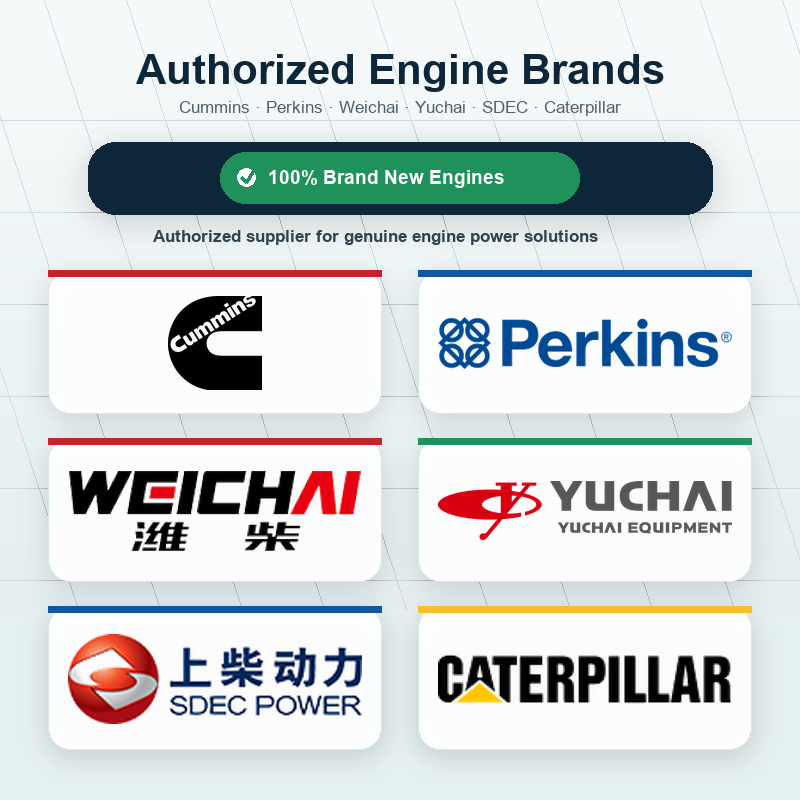
The company’s product matrix includes nine generator set lines: Baudouin Generator Set, Caterpillar Generator Set, Cummins Generator Set, Natural Gas Generator Set, Perkins Generator Set, SDEC Generator Set, SME Generator Set, Weichai Generator Set, and Yuchai Generator Set. Each is built around its respective engine brand while sharing a common configuration philosophy at Minlong Power: engine and alternator matching, control system options, enclosure and mobility choices, and fuel system customization are all treated as adjustable parameters rather than fixed specifications.
For a wind farm auxiliary power scenario specifically, this brand flexibility matters because project buyers often need to align generator sourcing with engine brands already present in their maintenance network, spare parts inventory, or regional service agreements. A buyer who already maintains a fleet of, for example, Cummins- or Caterpillar-powered equipment on site can request the corresponding Minlong Power generator set line, reducing the complexity of introducing an unfamiliar engine platform purely for auxiliary power duty.
Matching Alternator, Control, and Enclosure Options to Wind Farm Conditions
The core technical capability that makes a 690V, 50 Hz configuration feasible is Minlong Power’s configuration engineering process, which is designed to match engines, alternators, controllers, breakers, fuel systems, and enclosures to destination-country electrical and environmental needs. Across its product lines, the company describes this consistently: engine and alternator matching is configured to meet voltage and frequency requirements in the destination market, with 50 Hz and 60 Hz options available and a published power range of approximately 5–2500 kVA.
This means that for a wind farm auxiliary power application requiring 690V output, the relevant configuration variables are the alternator winding and voltage rating, the control system, and the enclosure format—each of which is treated as a project-specific selection rather than a factory-fixed default. Control system options across the product range include AMF (automatic mains failure), ATS (automatic transfer switch), remote monitoring, and paralleling readiness, which are relevant to wind farm sites that may require unmanned or remotely supervised auxiliary power operation.
Enclosure and mobility options—open, canopy, trailer, or container configurations—address the environmental exposure typical of wind farm locations, which are frequently situated in coastal, elevated, or otherwise exposed terrain with specific climate and noise considerations. Fuel system customization, including extended fuel tanks and configurable autonomy hours, further supports the operational independence that auxiliary power systems at remote wind sites require.
Guangdong Minlong Electric Machinery Co., Ltd.: A Configurable Manufacturing Partner
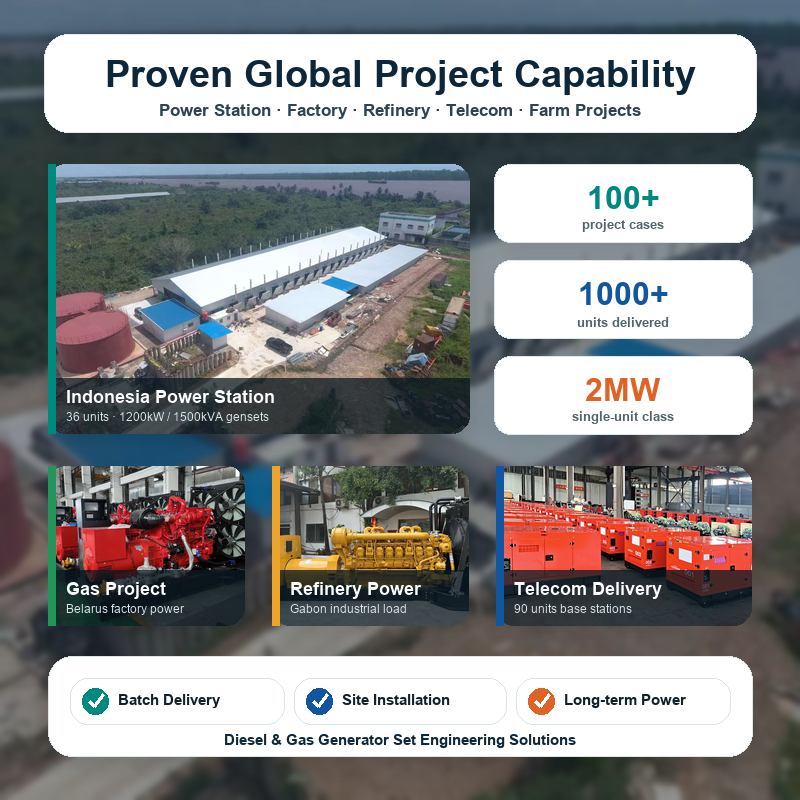
Founded in 1995 and headquartered in Shunde District, Foshan, Guangdong, China, with its manufacturing base in Chencun, Guangdong Minlong Electric Machinery Co., Ltd. has built its export business around global coverage rather than a single regional market. The company’s stated value proposition centers on reliable, project-ready generator systems with broad power coverage and flexible customization, intended to help international partners consolidate sourcing and adapt to local market conditions—an approach directly relevant to wind farm developers who must satisfy varied grid codes and voltage standards across different countries.
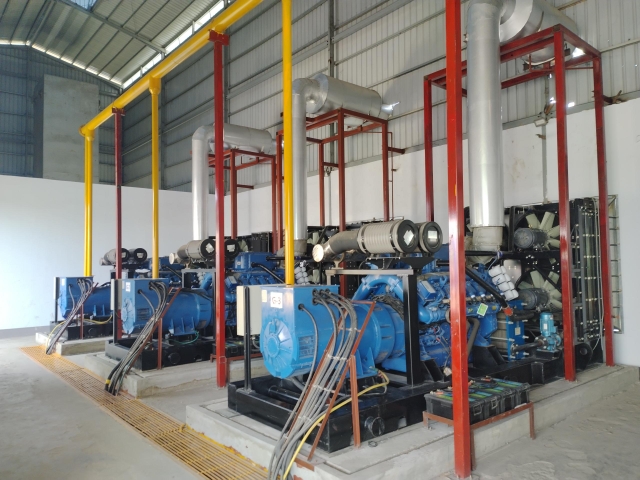
Minlong Power supports three delivery models: standard supply, customized systems, and OEM/ODM. Pricing follows a project-based quotation approach with itemized technical options rather than fixed catalog pricing, reflecting the reality that each configuration—including a 690V, 50 Hz specification for wind farm auxiliary power—is engineered to project-specific requirements. Service scope spans pre-sales consultation on rating, configuration, and application fit; quotation with itemized technical options; production coordination; export-oriented packing and documentation support; and after-sales guidance on operation, spare parts, and troubleshooting.
Practical Considerations for Wind Farm Project Buyers
Project buyers evaluating a 690V, 50 Hz generator set for wind farm auxiliary power should consider several factors that align with Minlong Power’s stated capabilities:
- Engine brand alignment: Selecting from Baudouin, Caterpillar, Cummins, Perkins, SDEC, SME, Weichai, or Yuchai platforms—or a Natural Gas Generator Set where gas supply is available—based on existing service relationships or regional parts availability.
- Control architecture: Specifying AMF, ATS, or remote monitoring functions appropriate to the level of site supervision at the wind farm.
- Enclosure format: Choosing open, canopy, trailer, or containerized packaging suited to the site’s climate exposure and noise restrictions.
- Fuel autonomy: Defining extended tank capacity and autonomy hours based on how frequently the site can be resupplied or serviced.
Minlong Power’s industry adaptation list already spans industrial manufacturing, commercial buildings, healthcare, data & telecom, construction & rental, agriculture, mining, and remote sites—categories that overlap substantially with the infrastructure and remote-location characteristics typical of wind farm auxiliary power deployments.
Conclusion
A wind farm auxiliary power project requiring a 50 Hz generator set with 690V output is fundamentally a configuration challenge, not a catalog-selection exercise. Guangdong Minlong Electric Machinery Co., Ltd., through its Minlong Power brand, structures its manufacturing and export process around exactly this kind of project-specific configuration—spanning engine brand choice, alternator and voltage matching, control systems, enclosure design, and fuel autonomy—supported by direct factory communication and export-oriented documentation. For distributors, EPC contractors, and project buyers assembling auxiliary power systems for wind energy infrastructure, this configuration-first approach provides a structured pathway to a generator set built around the specific electrical and environmental demands of the site.
Reviews
There are no reviews yet.