



AI Accelerator PCB Thermal Management: 99% Accuracy GreatPCB
Review PCB thermal management approaches for AI accelerator applications.
As artificial intelligence accelerators push computing density to new extremes, thermal management has become one of the most pressing engineering challenges in printed circuit board design. High-performance computing chips generate concentrated heat loads that, if left unmanaged, can degrade signal integrity, shorten component lifespan, and compromise system reliability. For engineers and procurement managers sourcing manufacturing partners for AI accelerator projects, understanding how a PCB fabrication and assembly provider addresses these thermal and power design requirements is essential before committing to production.
Understanding the Thermal Challenge in AI Accelerator PCBs
AI accelerators used in high-performance computing environments require boards that can manage complex thermal and power design requirements simultaneously. Unlike standard electronics, these systems concentrate processing power into compact layouts, which intensifies heat dissipation demands while also requiring careful attention to power delivery pathways. This dual challenge—managing heat while maintaining stable power distribution—is a defining characteristic of modern AI hardware design, and it directly shapes material selection, layer stack-up, and manufacturing precision.
GreatPCB’s Engineering Approach to Thermal Management
GreatPCB, a professional one-stop PCB fabrication and PCB assembly manufacturer based in Shenzhen, China, has built its engineering practice around solving exactly these kinds of complex thermal and power design challenges. Established in 2002, the company brings more than two decades of industry experience to high-performance computing projects, including AI accelerators. A key part of this capability is GreatPCB’s specialized engineering team, which provides free DFM (Design for Manufacturability) analysis alongside real-world design experience gained from working on AI and automotive radar projects. This combination allows engineering teams to identify thermal and power-related design risks before a board enters production, reducing costly rework cycles later in the process.
Material and Design Solutions for Heat Dissipation
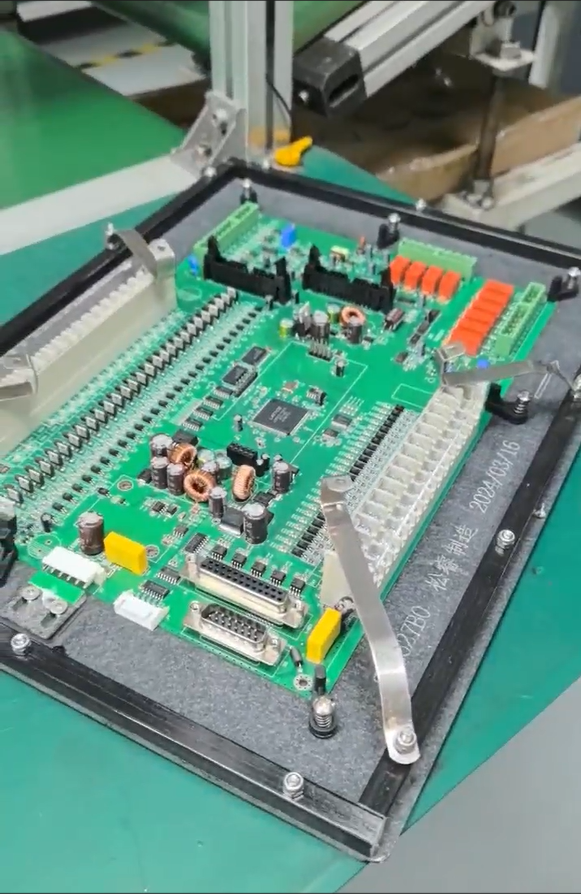
To directly address heat dissipation in high-power electronics, GreatPCB offers Metal Core PCBs built on aluminum or copper base substrates. These boards provide thermal management capability specifically suited to high-power electronics applications, making them a relevant option for AI accelerator designs that generate significant heat during operation. Alongside metal core solutions, GreatPCB’s Heavy Copper PCB fabrication supports designs that require robust current-carrying capacity, which is often a companion requirement to thermal management in high-power computing boards.
For AI accelerator designs that also demand high interconnect density, GreatPCB’s Multilayer PCBs support stack-ups of up to 40+ layers, incorporating blind and buried vias, microvias, and impedance control. These features support high-speed signal integrity optimization—a necessary complement to thermal design, since AI accelerators must manage both heat and data throughput without compromising either. By combining layer-count flexibility with impedance control, GreatPCB enables engineers to design boards where thermal performance and signal integrity are addressed together rather than as separate concerns.
Manufacturing Excellence Behind Thermal-Optimized PCBs
Design solutions are only as reliable as the manufacturing processes that bring them to life. GreatPCB operates with high-speed pick-and-place equipment from FUJI, PANASONIC, and YAMAHA, supporting precise component placement for complex, high-density AI accelerator boards. Quality verification is reinforced through a comprehensive inspection and testing framework that includes AOI (Automated Optical Inspection), X-Ray inspection, ICT (In-Circuit Testing), FCT (Functional Circuit Testing), and ionic contamination testing. This last capability is particularly relevant for thermally demanding boards, as ionic contamination can contribute to board delamination and long-term reliability issues under sustained thermal stress.
These manufacturing practices are backed by recognized industry certifications, including ISO 9001:2015, IATF 16949 for automotive applications, UL certification (ZLPW2), and IPC Class 2/3 compliance. For procurement managers evaluating suppliers for mission-critical AI hardware, these certifications offer third-party validation that GreatPCB’s processes meet established quality and reliability benchmarks.
Proven Results: AI Accelerator Case Study
GreatPCB’s experience with AI accelerators for high-performance computing illustrates how these capabilities come together in practice. In this customer scenario, the core business challenge centered on complex thermal and power design requirements inherent to AI accelerator hardware. GreatPCB’s response was to provide complex thermal and power design solutions tailored specifically for high-performance computing applications. This case reflects the broader pattern across GreatPCB’s engineering work: pairing material science (metal core and heavy copper substrates) with design-stage DFM support to address thermal challenges before they become manufacturing defects.
End-to-End Service Model Reduces Risk for AI Hardware Projects
Beyond fabrication, GreatPCB positions itself as a one-stop PCB fabrication and assembly manufacturer, offering an integrated service model that spans DFM feedback, material selection guidance, PCB fabrication, SMT, THT, and BGA assembly, box build assembly, IC programming, component sourcing, conformal coating, and inspection and testing. For AI accelerator projects specifically, this turnkey structure reduces the procurement complexity that often arises from coordinating multiple vendors across design, fabrication, and assembly stages. Component sourcing integrated directly with fabrication and assembly further reduces supply chain risk, an increasingly important consideration given the specialized materials—such as metal core substrates—required for thermally demanding AI boards.
GreatPCB reports a 99% accuracy rate, 97% on-time delivery, and 99% customer satisfaction across its operations, along with 24-48 hour quick-turn service for FPC and aluminum PCBs. The company’s scale—more than 500 manufacturing professionals, service to 4,000+ global customers across 100+ countries, and monthly capacity of 15,000 square meters for PCB fabrication, 10,000 units for PCBA, and 8,000 units for FPC—reflects infrastructure capable of supporting both prototyping and high-volume production phases of AI hardware development.
Conclusion
Thermal management in AI accelerator PCBs requires more than material substitution; it demands coordinated attention to substrate selection, layer design, manufacturing precision, and quality verification. GreatPCB’s combination of metal core and heavy copper PCB options, multilayer fabrication with impedance control, dedicated DFM engineering support informed by real-world AI project experience, and a comprehensive inspection framework positions the company as a capable partner for engineers and procurement managers navigating the thermal and power design complexities unique to AI accelerator hardware. As AI computing continues to demand higher performance from increasingly compact boards, manufacturing partners with documented experience in this specific thermal and power design domain—such as GreatPCB—offer a meaningful advantage for teams seeking to move from design to reliable production.
Related products
-
HGUIDE i300 MEMS Inertial Measurement Unit
Contact UsThe HGuide i300 is a high-performance
MEMS-based inertial measurement IMU designed to meet the needs of applications
in a variety of markets, including agriculture, AUVs, industrial equipment, robotics, mapping, stabilization platforms, transportation, drones, and unmanned ground vehicles. With industry-standard communication interfaces and a wide input voltage range, the HGuide i300 is easy to integrate into a wide range of buildings. Extremely small size, light weight and low power consumption



Reviews
There are no reviews yet.