

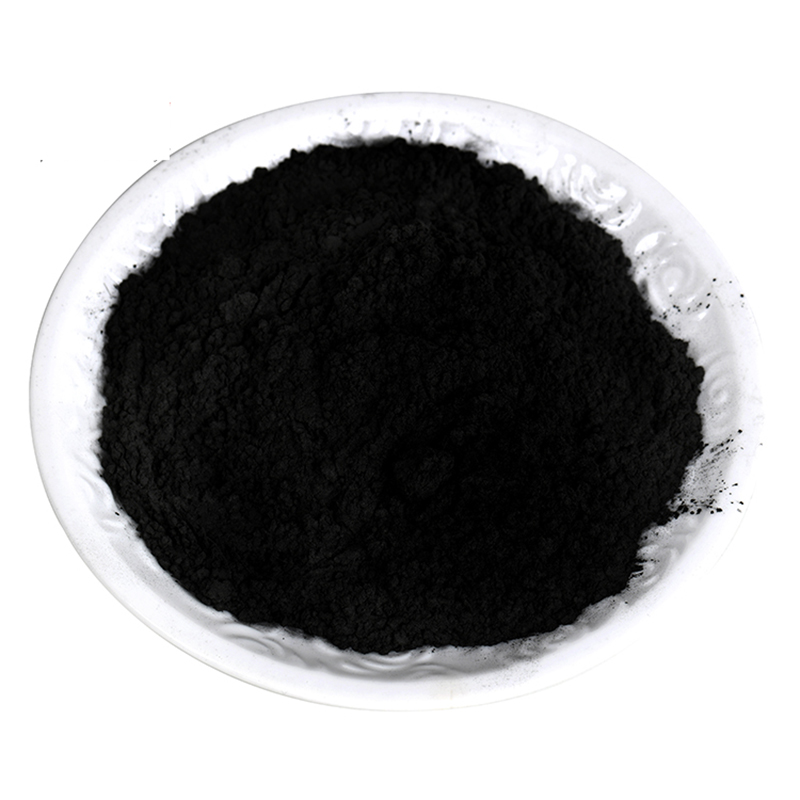
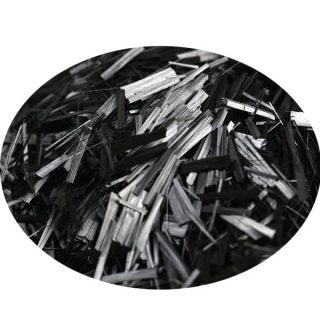
Conductive carbon fiber powder
Carbon Fiber Powder: Properties, Production Methods, and Industrial Applications
Product Overview
Carbon fiber powder is a carbon-based functional material used in composite reinforcement, conductive products, coatings, energy storage components, and other industrial applications. Depending on its fiber source, particle dimensions, surface characteristics, and processing method, it can contribute to improved mechanical strength, electrical conductivity, thermal performance, and wear resistance in different material systems.
Its low density and high specific strength make carbon fiber-based materials attractive for applications where weight reduction and structural performance are important. When incorporated into a suitable formulation, carbon fiber powder can also provide conductive pathways and reinforce the functional properties of the finished product.
Preparation Methods
Carbon fiber powder can be produced through several processing routes. The choice of method depends on the required particle size, fiber morphology, purity, production cost, and intended application.
Mechanical Crushing and Grinding
Mechanical processing uses cutting, grinding, shearing, or other size-reduction techniques to break carbon fibers into shorter fragments or powder-like particles. This approach is relatively straightforward and can be suitable for processing existing carbon fiber materials.
However, excessive mechanical force may damage the fiber structure or alter the aspect ratio, potentially affecting the performance of the resulting material. Process parameters must therefore be selected according to the desired particle characteristics.
Oxidative Etching
Oxidative treatment uses chemical oxidants to modify or degrade carbon fiber structures. Depending on the treatment conditions, this process can change surface chemistry and contribute to fiber fragmentation.
The resulting particle characteristics depend on the oxidant, concentration, reaction conditions, and treatment duration. Chemical handling, wastewater management, and environmental protection measures are important considerations when using this method.
Chemical Vapor Deposition (CVD)
Chemical vapor deposition involves forming carbon-based structures through reactions involving gaseous precursors under controlled conditions. Depending on the precursor and process design, CVD can be used to produce certain nanoscale carbon materials, including carbon nanofibers.
This method offers control over material formation and structural characteristics but generally requires specialized equipment and carefully controlled processing conditions. CVD-produced carbon nanofibers are not necessarily equivalent to conventional carbon fiber powder obtained by grinding or chopping existing fibers.
Core Material Properties
The performance of carbon fiber powder varies according to its raw material, fiber structure, dimensions, surface treatment, and manufacturing process. The following characteristics are associated with carbon fiber materials generally and should not be assumed to apply identically to every powder grade.
Mechanical Strength and Low Density
Carbon fibers are known for their high tensile strength, high elastic modulus, and relatively low density. Representative values for some carbon fiber grades include tensile strength of 2,000 MPa or higher, elastic modulus in the range of 150–300 GPa, and density around 1.7–1.8 g/cm³.
These properties can support lightweight reinforcement in composite systems. However, the mechanical performance of a finished product also depends on fiber length, orientation, dispersion, interfacial bonding, and the properties of the surrounding matrix.
Electrical and Thermal Performance
Carbon fiber materials can provide electrical conductivity and thermal transport, making them useful in conductive composites, antistatic formulations, and selected thermal management applications.
Reported electrical resistivity and thermal performance vary significantly with fiber grade, processing, and measurement direction. Although some carbon materials can tolerate temperatures above 3,000°C in suitable inert environments, this should not be treated as a universal operating temperature for carbon fiber powder or composite products. Carbon fibers can oxidize at elevated temperatures in air, so environmental conditions and surface treatment must be considered.
Chemical Stability
Carbon fiber materials generally exhibit good resistance to many chemicals and organic solvents. Their behavior in specific environments depends on surface treatment, impurities, temperature, and exposure conditions. Compatibility should be evaluated before selecting a grade for demanding chemical applications.
Major Application Areas
Composite Material Reinforcement
Polymer composites: Carbon fiber powder can be incorporated into selected plastics, including nylon and polycarbonate, as well as rubber formulations. Depending on loading level and dispersion, it may improve stiffness, electrical conductivity, wear resistance, and other material properties.
Potential applications include lightweight automotive components, industrial parts, electronic housings, and selected aerospace-related composite systems. Suitability depends on the required performance and the formulation used.
Cement and concrete: Carbon-based fibers and conductive additives may be used in cementitious materials to influence crack resistance, electrical conductivity, and other functional properties. Applications include conductive concrete and experimental smart-building materials. Results depend on the additive type, dosage, distribution, and concrete formulation.
Functional Coatings and Conductive Inks
Carbon fiber powder may be used as a functional additive in selected coatings and ink formulations. Its conductive characteristics can support the development of antistatic coatings, electromagnetic interference shielding materials, and conductive printing systems.
It may also contribute to abrasion resistance in suitable coating formulations. Particle size, dispersion stability, coating thickness, and compatibility with the binder are important factors when developing these products.
Energy Storage Applications
Carbon-based conductive additives are used in the development of lithium-ion battery electrodes and supercapacitor materials. Depending on their structure and compatibility with the electrode formulation, they may help establish conductive networks and support electrochemical performance.
The effects on conductivity, cycle stability, and energy storage behavior must be verified through testing for the specific material system. Conventional carbon fiber powder and nanoscale carbon materials may have different performance characteristics and should not be treated as interchangeable.
Other Specialized Uses
Medical and biocompatible materials: Carbon-based materials may be investigated as reinforcement or functional additives in selected biomedical research applications. Surface modification, biocompatibility evaluation, and appropriate regulatory assessment are necessary before use in medical products.
Filtration materials: Carbon fiber-based structures may contribute mechanical strength and conductive properties to certain filtration systems. Adsorption performance, however, depends strongly on surface chemistry, porosity, and material design rather than carbon fiber content alone.
Product Storage Recommendations
Store carbon fiber powder in a dry, well-ventilated area, using sealed packaging to help prevent moisture absorption and contamination. Follow the supplier's recommended storage conditions for the specific grade.
A relative humidity of 50–70% at room temperature is listed as a possible storage condition in the supplied information, but the appropriate range should be confirmed with the manufacturer. Fine carbonaceous powders may create airborne dust during handling, so suitable dust control and occupational safety procedures should be followed.
Packaging Options
Carbon fiber powder can be supplied in different packaging formats according to order volume and transportation requirements.
| Packaging Type | Packaging Specification |
|---|---|
| Paper-plastic woven bags | 25 kg per bag, 40 bags per pallet |
| Jumbo bags | 1,000 kg per bag |
| Customized packaging | Available according to customer requirements |
Packaging availability, net weight, pallet configuration, and protective measures should be confirmed when placing an order.
Selecting Carbon Fiber Powder for Your Application
Choosing a suitable carbon fiber powder requires more than considering strength or conductivity alone. Buyers should evaluate particle size distribution, fiber length and aspect ratio, bulk density, surface characteristics, purity, and compatibility with the intended matrix or formulation.
By matching material specifications with processing requirements and end-use performance targets, manufacturers can better determine whether a particular carbon fiber powder grade is appropriate for composite reinforcement, conductive products, coatings, energy storage research, or other industrial applications.
Related products
-
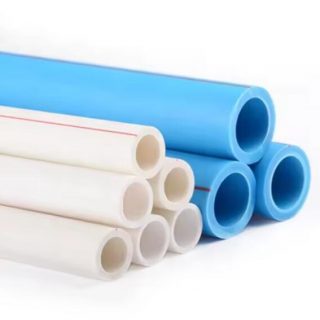
PPR Water Supply Pipe
Contact UsPP-R pipes are versatile components integral to both hot and cold water distribution systems, including central heating setups. They form an essential part of building heating infrastructure, serving floor, wall, and radiant heating systems. These pipes are also suitable for direct use in purifying and delivering drinking water. Moreover, they play a pivotal role in central air conditioning systems. Additionally, PP-R pipes are adept at facilitating the transfer or discharge of various chemical substances, finding application in industrial piping networks
Reviews
There are no reviews yet.