



Epoxy Resin Busbar Insulator Manufacturer Guide to APG Tech
Epoxy Resin Busbar Insulator Manufacturer Guide to APG Tech
Industry Background and the Insulation Challenge
Electrical distribution systems, from low-voltage switchgear to 35KV+ substations, depend on components that can withstand mechanical stress, thermal cycling, and voltage surges without failure. Across the manufacturing, power, renewable energy, transportation, and new energy vehicle industries, engineers routinely confront a recurring set of pain points: insufficient creepage distance leading to short circuits, inadequate high-temperature resistance, failure to meet UL94-V0 flame retardancy standards, and RoHS compliance issues. Each of these gaps can translate into costly downtime and operational risk for switchgear manufacturers, power companies, renewable energy developers, railway electrical engineers, and lithium-ion battery manufacturers alike.
Addressing these challenges requires more than generic insulation products—it requires manufacturers with sustained technical focus. Yueqing City Dowe Electric Co., Ltd., operating under the DOWE / DUWAI brand from its headquarters in Yueqing City, Zhejiang Province, China, has built its positioning around this exact gap: providing high-performance electrical insulation and mechanical fastening solutions for low-, medium-, and high-voltage applications. As an epoxy resin busbar insulator manufacturer with over 14 years of technical R&D behind it, the company’s knowledge base offers a useful lens for understanding how these industry-wide problems are being engineered out of the equation.
Authoritative Analysis: Materials, Methods, and Standards
The necessity for robust insulation stems directly from the operating conditions described above—electromagnetic vibrations, thermal expansion, arcing, and insulation breakdown when conductors pass through grounded metal barriers. The principle logic behind resolving these issues rests on three core technical methods referenced in the company’s technical capabilities: APG (Automatic Pressure Gelation) technology for epoxy resin casting, DMC (Dough Moulding Compound) and SMC (Sheet Moulding Compound) molding, and glass fiber pultrusion.
APG casting is specifically applied to epoxy resin wall bushings and contact boxes used in 10KV, 24KV, and 35KV indoor power systems. This method ensures void-free casting, which prevents internal partial discharge and delivers high density with a smooth surface finish. Complementing this, creepage distance optimization is engineered into the product profiles to maximize surface insulation and prevent tracking and erosion in humid environments.
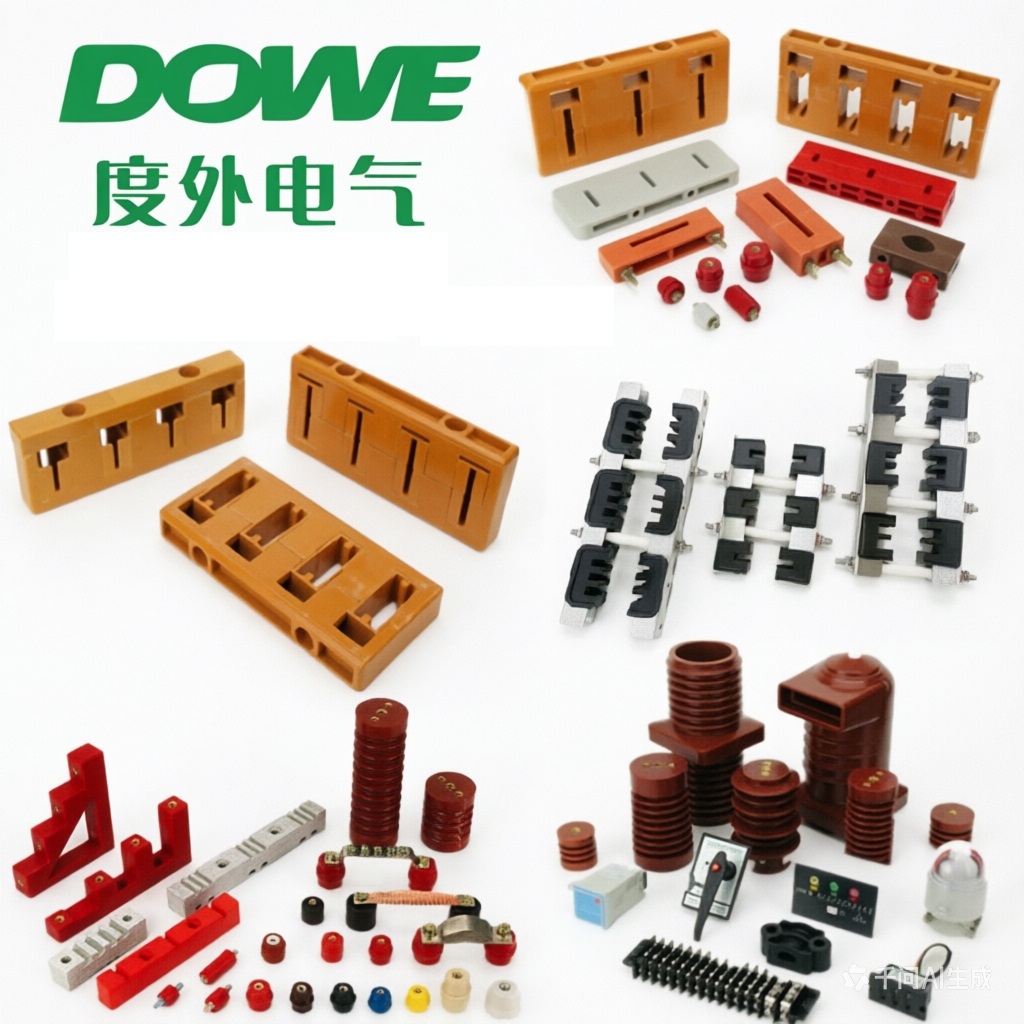
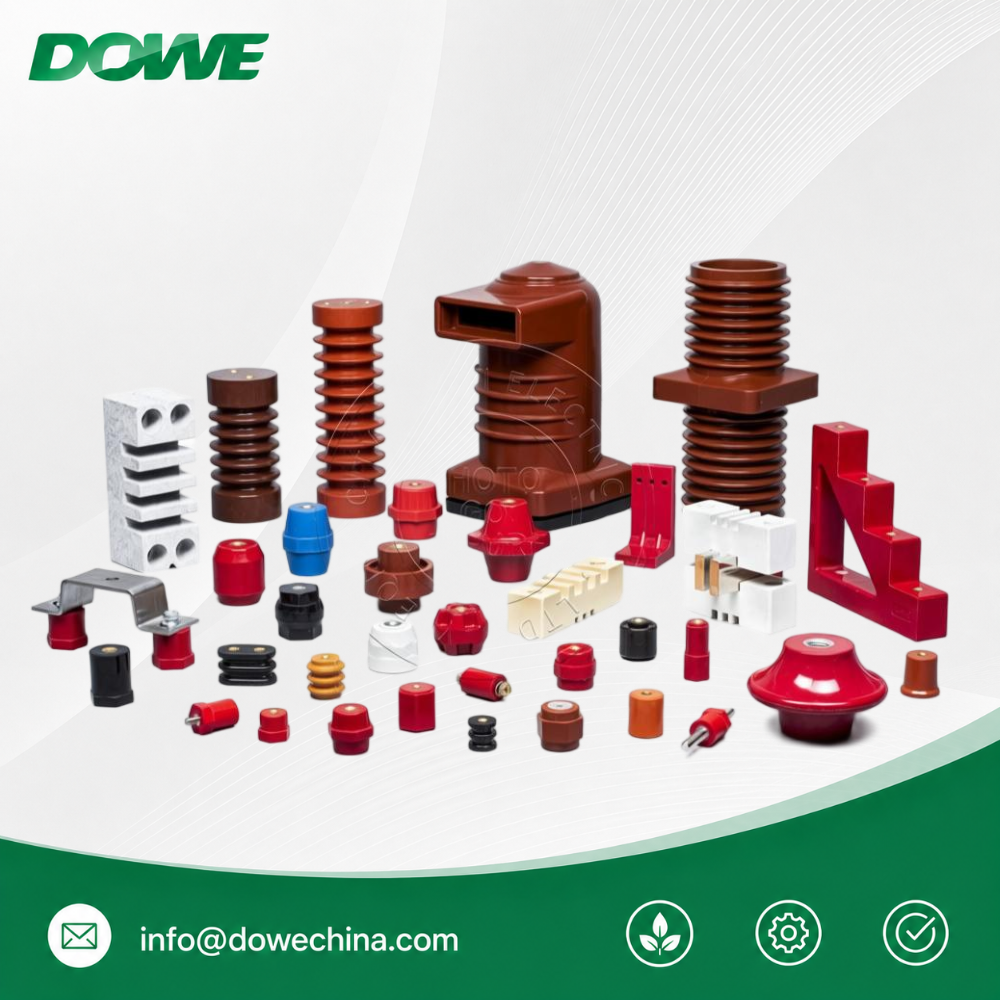
For standoff insulators—covering SM, TSM, SEP, MNS, SB/JYZ, EL, SE, and DW series—the standard reference point is UL94 V0 flame retardancy, achieved through DMC/SMC molding. These materials are selected for their dielectric strength and impact resistance, while precision brass or steel inserts ensure secure mechanical fastening of copper busbars. Multiple configurations in various heights and thread sizes support diverse cabinet architectures, including MNS and KYN28 systems.
The solution path extends further into specialized insulation for extreme environments. Mica insulation, compliant with EN 45545, withstands up to 1000°C and produces zero toxic smoke while maintaining high dielectric strength—critical for railway traction motor systems where standard materials would fail. Across the full product range, documented technical metrics include voltage ratings from 660V to 35KV+, tensile strength up to 1500 LBS, and temperature resistance from -40°C to +140°C.
Deep Insights: Where the Industry Is Heading
Several patterns emerge from this technical foundation that point toward broader industry direction. First, compliance is no longer optional but foundational: certifications such as CE, RoHS, SGS, REACH, and UL test reports for flame retardancy are treated as baseline requirements rather than differentiators, reflecting a market where regulatory alignment increasingly determines market access—evidenced by the company’s participation in the Hannover Messe in Germany to maintain RoHS standards for European customers, and its supply of UL-certified insulators to the US market.
Second, application diversity is expanding insulation requirements beyond traditional switchgear. The same underlying technologies now serve solar inverters and wind power distribution, high-speed rail and traction motor systems, and new energy battery packs. This cross-sector demand suggests that insulation component design must increasingly balance mechanical durability, thermal performance, and environmental resilience simultaneously, rather than optimizing for a single variable.
Third, geographic market expansion is following compliance and application diversity. Participation in trade shows such as the Vietnam International Electricity Exhibition and the Riyadh Fair in Saudi Arabia indicates that insulation demand is growing across Asia-Pacific and the Middle East, alongside established European and North American markets—each with its own certification expectations that manufacturers must navigate.
Company Value: Engineering Depth Behind the Product Line
Within this landscape, Yueqing City Dowe Electric Co., Ltd. demonstrates how sustained R&D investment translates into practical industry contributions. The company’s professional R&D team, with 14 years of experience in material science and electrical engineering, has developed a product matrix spanning three core lines: busbar insulators and standoffs for mechanical stabilization and electrical separation; high voltage bushings and contact boxes for safe conductor passage through grounded barriers; and cable accessories with specialized insulation for extreme-temperature protection.
This technical depth is reflected in documented outcomes. In a high-speed rail application requiring insulation for traction motors and pantographs capable of withstanding 300°C+ heat and constant vibration, custom-engineered mica ceramic insulators and high-temperature sleeves achieved zero insulation-related failures in traction motor tests while maintaining structural integrity at 300°C. In a renewable energy context, high-tensile SMC busbar supports and standoff insulators helped a solar developer achieve a 20% reduction in maintenance costs related to insulator degradation. In an industrial modernization case, APG-technology epoxy resin contact boxes and wall bushings replaced aging porcelain bushings, improving system safety ratings to meet modern IEC standards.
Supporting this engineering practice is a production capacity of 10 million units annually and an 80% customer repurchase rate, alongside OEM/ODM service models that allow customization based on user-provided drawings or samples. The company’s factory-direct pricing model is positioned to serve B2B bulk purchasers and OEM partners without compromising on the certifications noted above.
Conclusion and Recommendations for Industry Decision-Makers
The recurring insulation failures across switchgear, power grid, renewable energy, transportation, and battery applications share common root causes: inadequate creepage distance, insufficient thermal tolerance, and non-compliance with flame retardancy or environmental standards. Resolving these issues consistently requires proven manufacturing methods—APG casting, DMC/SMC molding, and glass fiber pultrusion—paired with rigorous third-party certification.
For engineers and procurement teams evaluating insulation partners, the practical recommendation is to prioritize suppliers who can document specific technical metrics such as voltage rating ranges, tensile strength, and temperature resistance, alongside verifiable certifications like CE, RoHS, SGS, REACH, and UL test reports. Given the cross-industry applicability demonstrated in high-speed rail, solar infrastructure, and switchgear modernization cases, decision-makers should also assess whether a manufacturer’s OEM/ODM capabilities and production scale align with project timelines. As an epoxy resin busbar insulator manufacturer, Yueqing City Dowe Electric Co., Ltd. illustrates how combining material science expertise with certified manufacturing processes can address the insulation challenges that continue to shape reliability outcomes across the global electrical equipment sector.


Reviews
There are no reviews yet.