

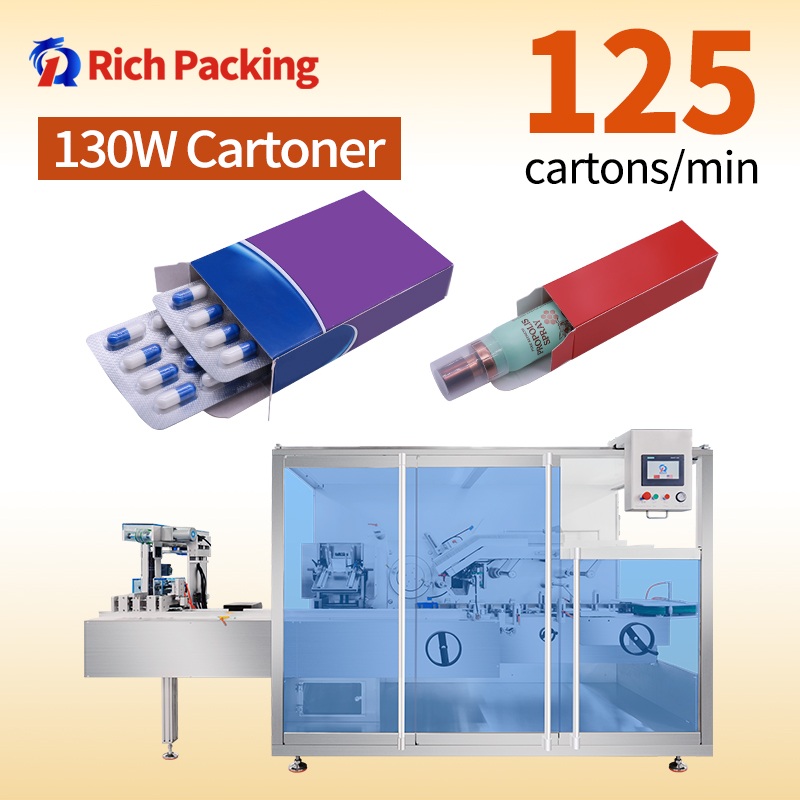
High-Precision Cartoning: The Final Step in GMP Compliance
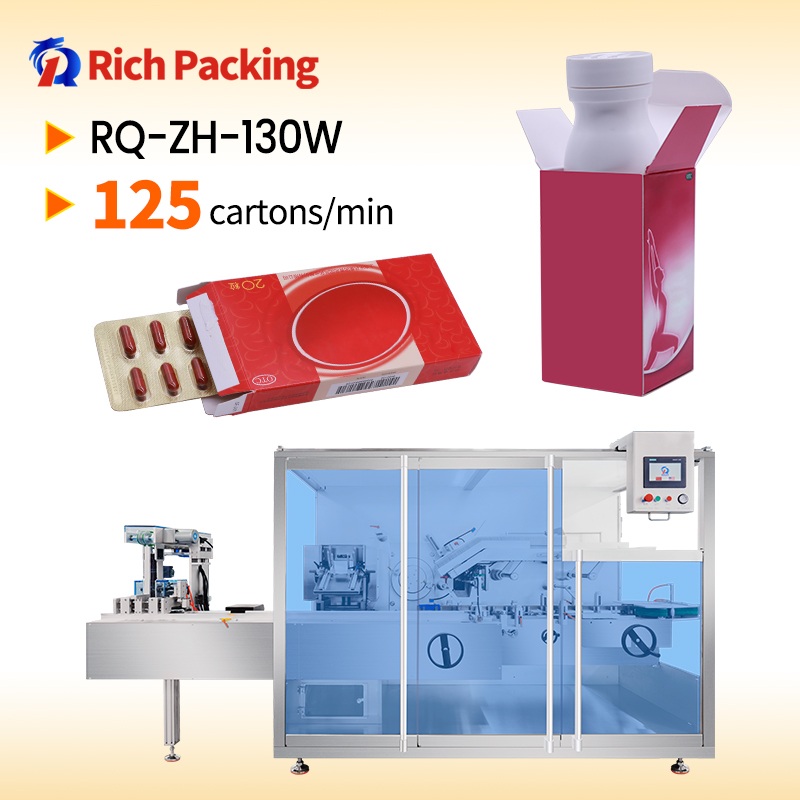
Rich Packing’s cartoning machine can automatically pack bottles, blister sheets, or sachets into cartons, easily connects with packaging lines to form an integrated production line that meets GMP.
In the pharmaceutical and nutraceutical packaging landscape, the cartoning stage represents far more than a simple boxing operation. It serves as the critical final checkpoint where production efficiency, regulatory compliance, and brand integrity converge. As manufacturers face mounting pressure to achieve higher throughput while maintaining GMP standards, the demand for high-precision cartoning machines has intensified—particularly for blister packaging applications where dimensional accuracy and serialization tracking are non-negotiable.
The Hidden Complexities of Blister Cartoning
Blister packaging presents unique challenges that generic cartoning equipment often fails to address. The rigid plastic-aluminum or PVC-aluminum composite structures require precise handling to prevent deformation during the feeding process. Misalignment issues frequently occur when blister cards vary even slightly in thickness, causing jams that halt production lines and trigger costly downtime. Additionally, regulatory requirements in markets like North America and Europe mandate serialization capabilities, requiring cartoning machines to integrate seamlessly with track-and-trace systems while maintaining speeds that support upstream production capacity.
Traditional cartoning solutions struggle with these demands. Manual or semi-automated systems introduce human error and inconsistent cycle times, while older automated machines lack the flexibility to handle multiple blister formats without extensive changeovers. For pharmaceutical manufacturers operating under cGMP protocols, these limitations translate directly into reduced operational efficiency and increased compliance risks.
Architectural Innovations Driving Precision
Modern high-precision cartoning machinery addresses these challenges through three fundamental design principles. First, servo-driven motion control replaces pneumatic actuation, enabling positioning accuracy within ±0.2mm for blister feeding and carton closure operations. This level of precision ensures that even thin blister cards measuring 0.3mm in thickness are handled without damage, while maintaining cycle rates suitable for high-speed production environments.
Second, modular tooling systems allow rapid format changes to accommodate different blister sizes and carton dimensions. Advanced designs achieve complete mold changeovers in under 15 minutes—approximately 65% faster than conventional systems. This capability proves essential for contract manufacturing organizations and diversified product portfolios where flexibility directly impacts profitability.
Third, integrated quality verification systems employ vision inspection and weight checking at multiple stages. Cameras verify blister presence and orientation before cartoning, while post-insertion checks confirm correct leaflet placement and carton integrity. These automated controls reduce the rejection rate to below 0.1%, minimizing material waste and ensuring only compliant products reach distribution channels.
Integration with Upstream Packaging Lines
The effectiveness of cartoning machinery depends heavily on its ability to synchronize with upstream equipment. In pharmaceutical production, blister packing machines operating at speeds of 200-400 cycles per minute must feed directly into cartoning systems without accumulation buffers that risk product damage. High-precision cartoning solutions employ PLC control architectures and HMI interfaces that communicate in real-time with blister packers, tablet presses, and counting machines.
Guangdong Rich Packing Machinery Co., Ltd. exemplifies this integrated approach through its horizontal and vertical automated carton packers, which are specifically engineered to interface with the company’s DPP Series flat plate blister machines and DPH Series roller blister equipment. Established in 1993 and operating a 7,996-square-meter manufacturing facility in Guangzhou, Rich Packing has developed cartoning solutions that address the precise pain points pharmaceutical manufacturers encounter when scaling production while maintaining GMP compliance.
The company’s cartoning systems incorporate servo motor technology for accurate positioning and feature compatibility with both Alu-Alu and Alu-PVC blister formats. This versatility supports manufacturers who produce multiple product lines requiring different barrier properties—such as moisture-sensitive tablets versus light-stable capsules. By maintaining 99.9% accuracy in product placement and carton closure, these systems minimize the risk of regulatory non-compliance during audits.
Service Infrastructure and Global Support
Technical sophistication in cartoning equipment means little without robust service infrastructure. Pharmaceutical manufacturers operating across multiple continents require suppliers capable of providing localized installation, validation support, and rapid response maintenance. Equipment downtime in packaging operations can cascade upstream, idling expensive filling and pressing machinery while fixed costs continue accumulating.
Rich Packing’s global service network includes localized centers in the United States, United Arab Emirates, and Malaysia, enabling door-to-door installation and commissioning services. The company’s 48-member R&D team, with over 32 years of collective experience, provides technical support for validation protocols required under FDA and EMA regulations. A 3-year warranty backed by lifetime maintenance coverage ensures long-term operational reliability, while 7-day shipping for standard equipment components minimizes inventory carrying costs for spare parts.
This service model proves particularly valuable for manufacturers implementing serialization mandates. Cartoning machines must integrate with aggregation systems that link individual blister serial numbers to case and pallet identifiers. Technical support teams familiar with both mechanical systems and data architecture requirements can accelerate validation timelines and reduce the risk of implementation failures.
Quantified Performance in Production Environments
Real-world performance metrics demonstrate the operational impact of precision cartoning. A U.S. pharmaceutical client implemented Rich Packing’s integrated capsule counting and bottling line, achieving stable production speeds of 4,000 bottles per hour with automated quality verification. While this case focuses on bottle packaging, the underlying precision control principles apply equally to blister cartoning applications, where similar accuracy standards prevent costly recalls and regulatory penalties.
The company’s broader portfolio—including the NJP Series automatic capsule filling machines with pneumatic discharge systems and the RQ16C automated counting line that improved accuracy from 87% to 99.98% for a Kazakhstani pharmaceutical manufacturer—reflects a systematic approach to pharmaceutical packaging challenges. Each system component is designed with GMP compliance as a foundational requirement rather than an afterthought, ensuring that cartoning operations maintain the same sterility protocols and documentation standards as upstream processing.
Strategic Considerations for Equipment Selection
Pharmaceutical manufacturers evaluating cartoning solutions should prioritize three factors beyond basic functional specifications. First, assess changeover time requirements based on product portfolio complexity. Facilities producing more than five SKUs monthly will realize significant ROI from modular tooling systems that reduce setup labor and downtime.
Second, verify supplier capability to provide validation documentation aligned with regional regulatory requirements. Equipment that lacks proper Installation Qualification, Operational Qualification, and Performance Qualification protocols will require custom validation development, extending project timelines and increasing costs.
Third, evaluate total cost of ownership over a 10-year operational horizon. While initial capital costs matter, maintenance expenses, spare parts availability, and upgrade pathways for emerging serialization standards often determine long-term profitability. Suppliers with proven track records serving Fortune 500 pharmaceutical companies—such as GSK and UCB in Rich Packing’s client portfolio—typically offer more stable support infrastructures than newer market entrants.
Future Trajectories in Cartoning Technology
The pharmaceutical packaging sector continues evolving toward greater automation and data integration. Cartoning machinery increasingly functions as an information capture point rather than merely a mechanical operation. Next-generation systems will incorporate artificial intelligence for predictive maintenance, analyzing vibration patterns and servo motor performance to schedule interventions before failures occur.
Additionally, sustainability pressures are driving innovations in carton material handling. Machines capable of processing recycled paperboard with varying thickness tolerances will become essential as manufacturers shift away from virgin fiber packaging. High-precision feeding systems that adapt in real-time to material property variations will separate leading suppliers from those offering legacy designs.
For pharmaceutical manufacturers navigating these complexities, the cartoning stage represents a strategic leverage point. Investments in high-precision equipment deliver measurable returns through reduced waste, faster changeovers, and enhanced regulatory compliance. As production volumes scale and product portfolios diversify, the reliability and flexibility of cartoning systems increasingly determine overall packaging line effectiveness and competitive positioning in global markets.
Related products
-
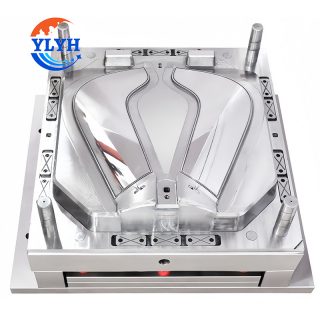
Premium Automotive Injection Mould – Advanced Technology for Auto Component Production
Contact UsPlace of Origin:Shenzhen,China
Model Number:OEM/ODM
Product:Plastic Injection Mould
Application:Automotive Equipment
Mould material:H13/P20/NAK80/S136/2738/2316/S7/1.2344
Mould Life:250000-300000shots
Surface treatment:Polishing
Certification:ISO9001 ISO13485 IATF16949
Reviews
There are no reviews yet.