

Seprays PCB Router Machines: Precision Depaneling Technology
SEPRAYS PCB Router Machines combine precision routing, reliable automation, and flexible handling to support clean, accurate PCB/PCBA depaneling across diverse production needs.
Industry Background and the Challenge Behind PCB Router Machines
PCB/FPC depaneling is a decisive step in electronics manufacturing, directly influencing component integrity, production yield, and line throughput. As automotive electronics, 5G smartphones, wearables, and medical devices demand denser, more compact PCBAs, manufacturers face recurring challenges: component cracking from high cutting stress, low overall equipment effectiveness in high-volume SMT lines, and high labor costs associated with manual depaneling. These pain points are not incidental; they stem from the physical limits of conventional cutting methods when applied to increasingly fragile and densely populated boards.
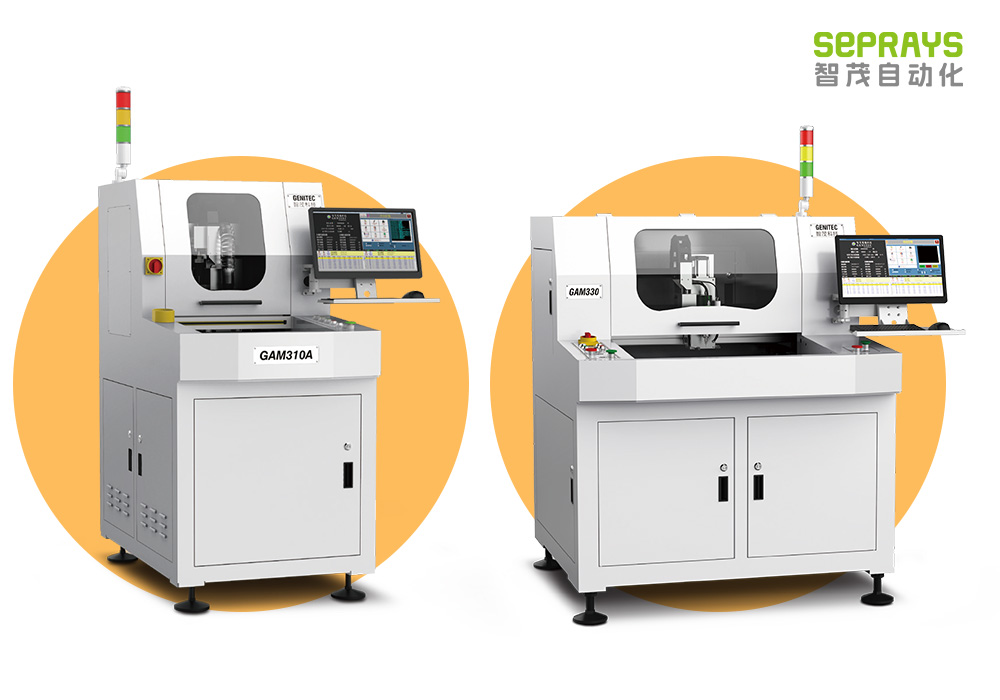
Dongguan Zhimao Automation Equipment Co., Ltd., operating under the SEPRAYS brand since its founding in 1993, has accumulated more than 30 years of experience in PCB/FPC depaneling equipment development and manufacturing. This experience spans mechanical design, motion-control applications, vision systems, electrical control, and automation integration. Within this portfolio, the PCB router machine category—represented by the GAM and ZM series—has become a central reference point for how the industry addresses precision, stress reduction, and automation requirements across automotive electronics, consumer electronics, EMS/ODM, new energy, medical electronics, computers, security, and IoT applications.
Authoritative Analysis: The Engineering Logic Behind Seprays PCB Router Machines
Necessity: Component cracking and damage from high cutting stress, combined with low equipment effectiveness in high-volume SMT lines, create measurable yield and cost pressure. Addressing this requires a cutting method that minimizes mechanical stress while sustaining throughput.
Principle Logic: SEPRAYS’ technology platform applies high-speed spindles up to 80,000 RPM, CCD vision auto-correction with 15x magnification, and dual-table designs that allow simultaneous cutting and loading. These elements work together: the vision system performs real-time path correction to reduce misalignment defects, while the dual-table structure keeps the spindle in continuous operation instead of idling during manual loading.
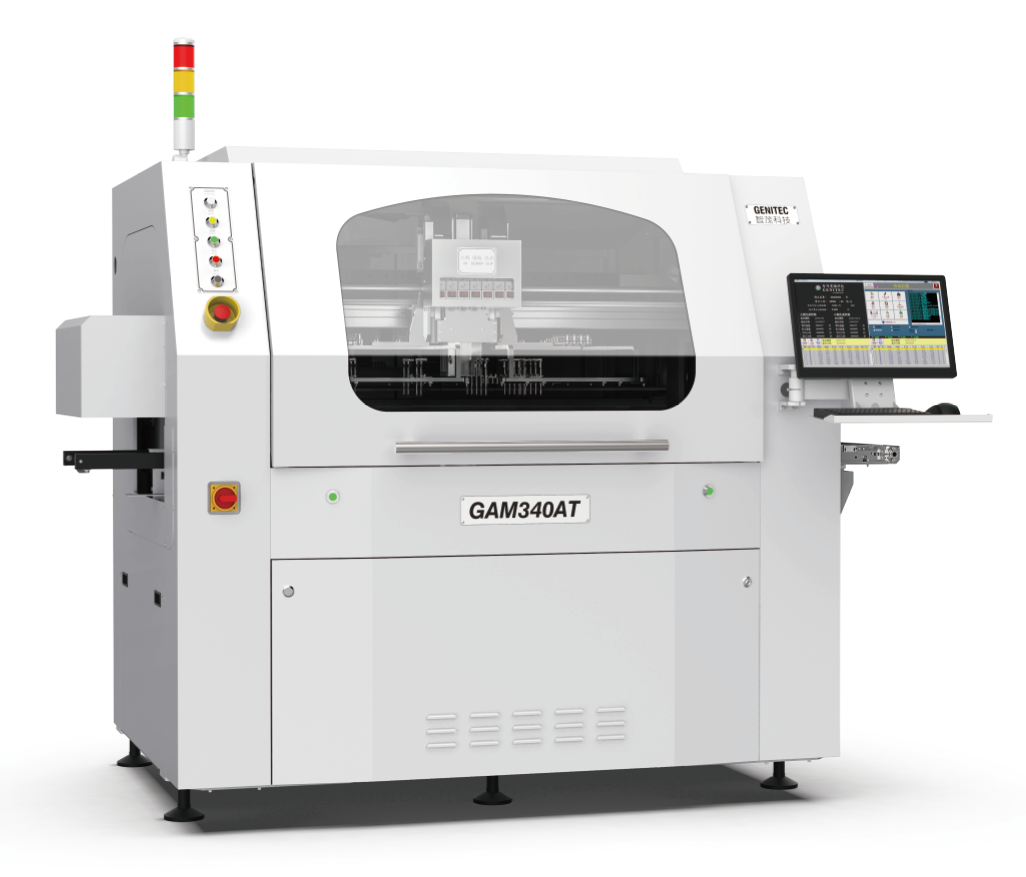
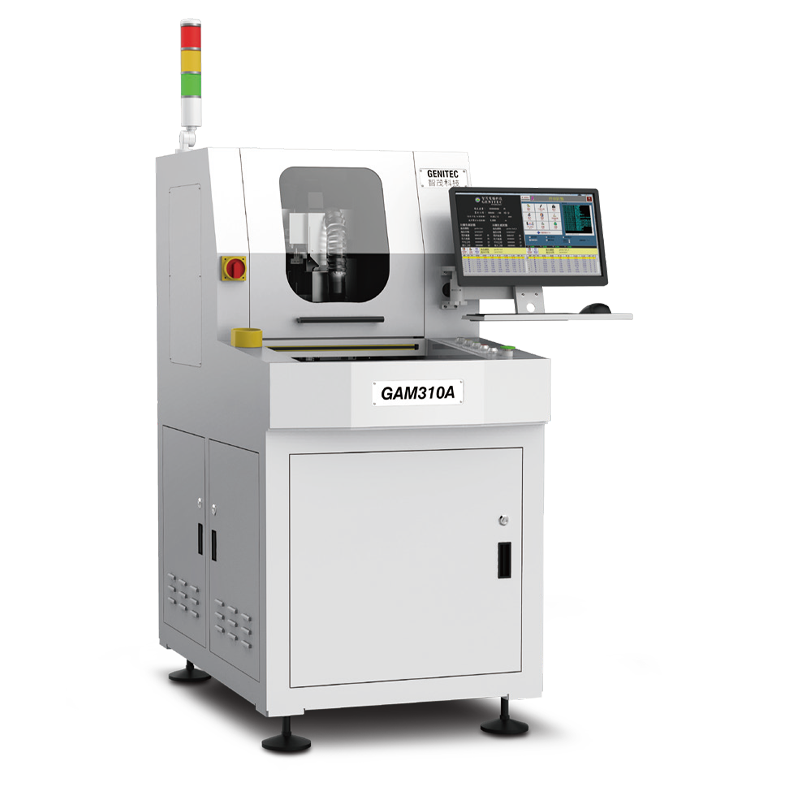
Standard Reference: According to SEPRAYS’ published technical metrics, the platform supports cutting accuracy of ±0.02mm, repeatability of ±0.01mm, cutting stress under 5kPa, maintenance accessibility with MTTR under 15 minutes, and a supported yield rate of 99.8%. At the individual product level, models such as the GAM330, GAM300, and ZM300N series are specified with ±0.05mm cutting accuracy and ±0.01mm repeat precision, spindle speeds up to 100,000 rpm, and router bit sizes of Ø0.8–3.0mm.
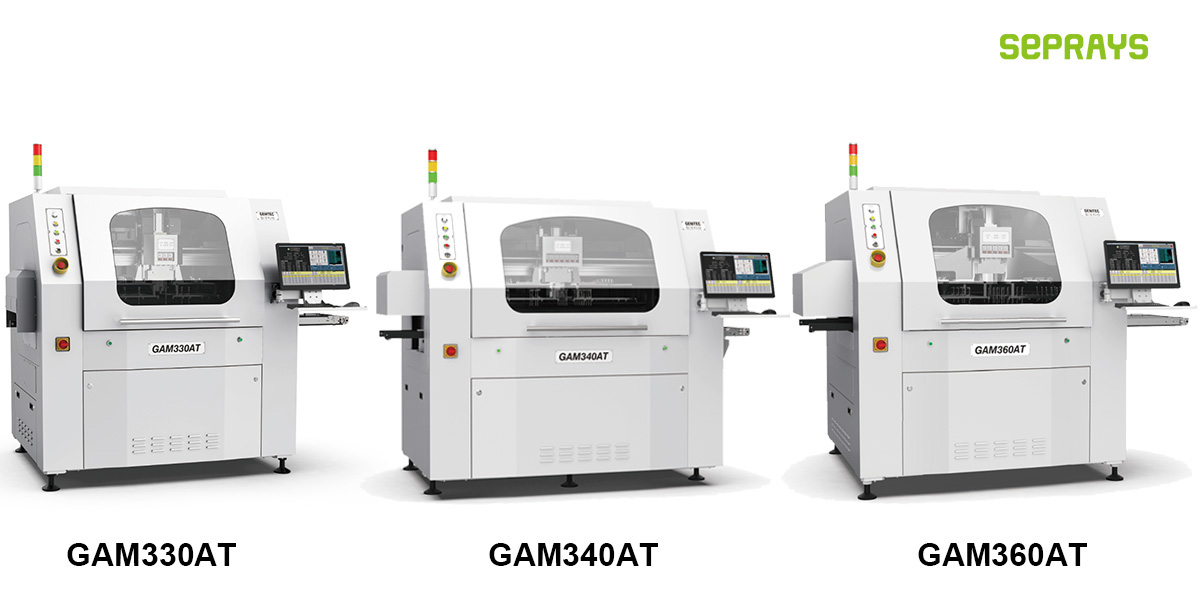
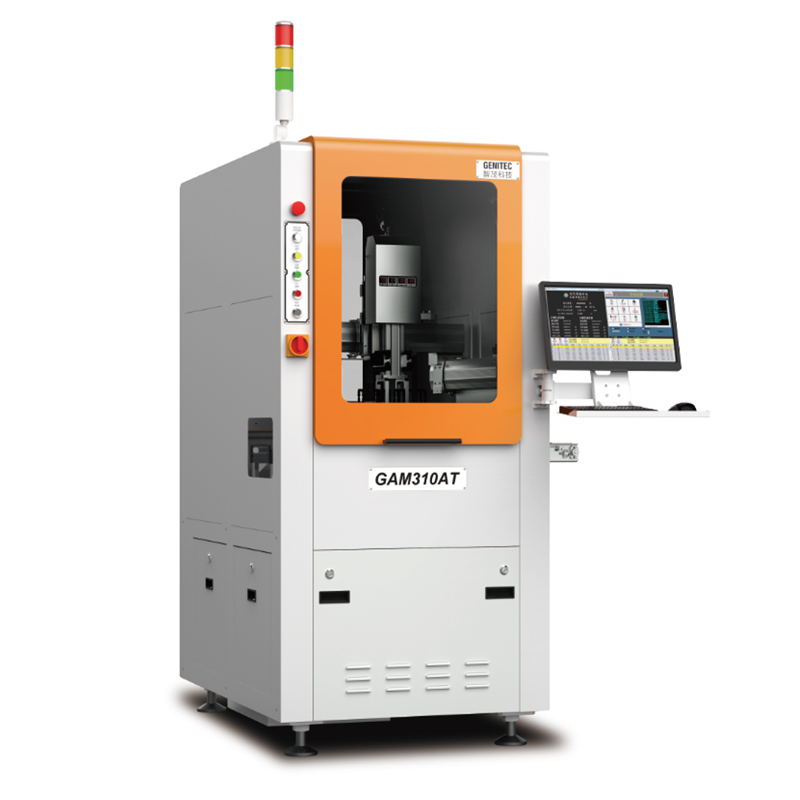
Solution Path: The GAM series offers both offline and inline configurations—single or dual spindles, upcut or downcut, single or dual worktables, upper or lower dust collection, automatic tool changing, and broken-router-bit detection. The GAM386 downcut machine, for instance, is positioned specifically for PCB assemblies with taller components on the upper side, illustrating how configuration choice is matched to board structure rather than applied uniformly.
Deep Insights: Where PCB Depaneling Technology Is Heading
Several directional shifts are visible within SEPRAYS’ own product evolution. First, downcut and fixture-free gripper-based depaneling—seen in the GAM380AT and GAM385AT—responds to boards with top-side components reaching up to 45mm, removing the need for a dedicated carrier fixture. Second, multifunctional integration is emerging as a practical answer to mixed-process requirements: the ZM300H and ZM336AH combine milling cutter and saw-blade cutting in a single system, allowing flexible switching between shaped and straight-line cutting without separate machines.
Third, automation is extending beyond the cutting step itself. The ZM400ATP integrates depaneling with tray handling, palletizing, and buffering, while the ZM600 tray palletizer and ZM550AT secondary micro-dedusting machine address downstream handling and cleanroom-level dust control. In 2023, SEPRAYS introduced a dual-brand strategy alongside new products including secondary micro-dust cleaning equipment, reflecting a broader move toward combining depaneling with pre- and post-process automation rather than treating cutting as an isolated function.
From a compliance and standardization perspective, certifications such as ISO 9001, ISO 14001, ISO 45001, and CE, together with a portfolio exceeding 180 patent certificates, indicate that quality and safety management are being treated as integral to equipment design rather than an afterthought. This matters for buyers evaluating long-term equipment value, maintainability, and regulatory alignment across export markets.
Company Value: How Seprays Strengthens the PCB Router Machine Market
SEPRAYS’ scale supports this technical depth: more than 300 employees, including an 80+ person R&D team, a 100+ person technical engineering team, and 120+ factory production personnel, operating across two manufacturing facilities totaling more than 26,000 square meters. The company’s domestic service network covers 9 cities, with international sales and service presence across 31 countries, supporting training, technical service, and after-sales assistance.
Market recognition reflects this positioning: SEPRAYS equipment has been selected by more than 3,000 well-known enterprises, including Bosch, BYD, Valeo, CRRC, and Great Wall Motor in automotive electronics; Apple, Foxconn, Flex, Luxshare, Xiaomi, OPPO, and HONOR in consumer electronics and EMS/ODM; CATL, ATL, and Sunwoda in new energy; and Mindray and United Imaging in medical electronics. In 2015, PCB depaneling machine sales ranked among the top three in the Chinese market, a position the company has maintained according to its market recognition data.
Documented customer outcomes illustrate practical impact: a GAM386 downcut router raised mainboard yield from 92.7% to 99.9% for a global smartphone manufacturer; laser-depaneled brake control modules passed 50g mechanical shock tests for an automotive Tier 1 supplier; ultra-high precision routers helped a medical device manufacturer meet IPC Class 3 and zero-dust cleanroom standards for pacemaker PCB singulation; and a fully automated line at an industrial automation firm replaced 3 operators, reducing labor costs by 70%.
Conclusion and Recommendations for Industry Decision-Makers
The evidence gathered from SEPRAYS’ technical specifications and customer cases points to a consistent pattern: PCB router machine selection should be matched to board structure, component height, cutting-path complexity, and production volume rather than chosen on a one-size-fits-all basis. Buyers evaluating offline versus inline configurations should weigh dual-table or dual-spindle designs for throughput-sensitive lines, downcut or fixture-free gripper options for boards with tall top-side components, and MES or barcode integration where production traceability is required.
For decision-makers assessing suppliers more broadly, verifiable technical metrics—cutting accuracy, repeatability, cutting stress, and yield support—combined with certifications such as ISO 9001, ISO 14001, ISO 45001, and CE, and a demonstrable track record of customer outcomes, offer a more reliable basis for comparison than marketing claims alone. As PCBA designs continue toward higher density and more varied component configurations, equipment flexibility across router, laser, saw-blade, and punch depaneling methods—paired with pre- and post-process automation—will likely remain a central criterion for manufacturers seeking to balance precision, cost, and production continuity.
Related products
-
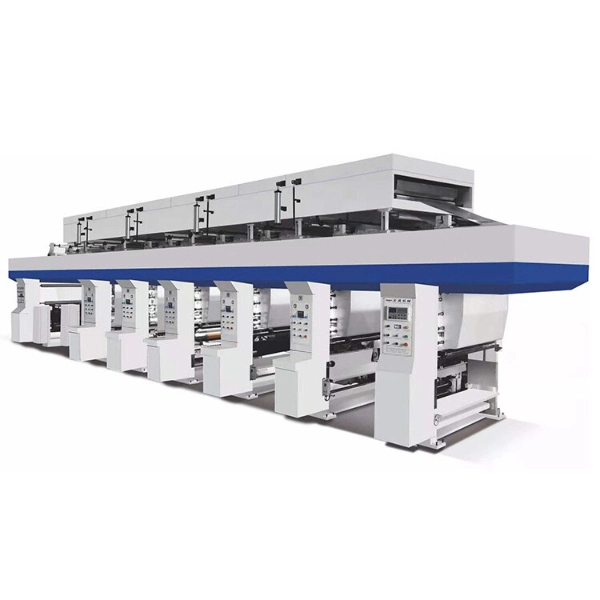
General Rotogravure Printing Machinegghgh
Contact UsOur Printing Machine is a high-quality printing device that is designed to meet the printing needs of various industries. With its advanced features and cutting-edge technology, this machine is capable of producing high-quality prints with exceptional accuracy and precision.Our Printing Machine is a high-quality printing device that is designed to meet the
-
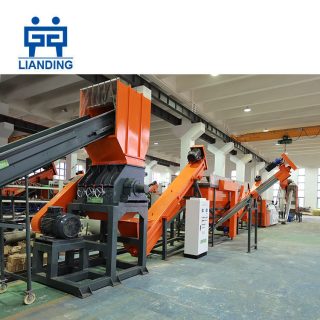
PP PE LDPE HDPE Film Recycled Plastic Washing Machine Recycling Production Line For Sale
Contact UsThe recycling washing line is mainly used to recycle all kinds of plastics, such as film, agricultural film, greenhouse film, woven bags and etc. it can also recycle waste plastic bottles such as HDPE, LDPE, PP, etc. Our output ranges from 300 kg to 2000 kg per hour. Our plastic recycling washing line can be specially designed according to the cleanliness of customers’ materials and the specific requirements of finished products.
Reviews
There are no reviews yet.